Botswana Safaris 101: Everything You Need to Know
The best time to go, the most beautiful camps and lodges, and how to work with tour operator African Travel to make it all happen.
A Botswana safari is truly like no other. Just north of South Africa, sandwiched between Namibia and Zimbabwe, the landlocked country is one of the continent’s most biodiverse. The semi- arid Kalahari Desert covers some 70 percent of the land, while farther north, savanna game drives give way to aquatic expeditions in the palm-fringed canals of the Okavango River, which grows seasonally to form the 6,500-square-mile Okavango Delta.
Punctuated by centuries-old, towering baobab trees, vast swaths of fenceless wilderness cover much of Botswana – something the country has maintained, thanks to a history of championing conservation efforts and limiting development to low-density lodges. The eco-minded safari destination is also inclusive:
Because of its exclusivity, Botswana is an investment-grade safari.
Here, everything to consider before booking your Botswana safari.
A Botswana Safari Is Best for Explorers
Botswana offers a safari experience distilled to its essence: a means to explore the crowd-free wilderness from a comfortable but authentic base, while in the care of expert guides. It’s a destination for travelers seeking to disconnect and immerse themselves in life’s natural rhythms, whether they’re in the lush Okavango, the salt pans of the northeastern Makgadikgadi, or the central Kalahari’s sandy stretches. Diverse ecosystems – and scenic transfers via bush plane – ensure wonders never cease. It’s easy to spend an entire safari in Botswana alone, but the country’s convenient location means ours consultants can incorporate visits to neighboring destinations, such as Zambia and South Africa. A ten-day Zambia and Botswana itinerary, for example, begins with three days in Zambezi National Park before a stopover near Victoria Falls and three days of immersion in the Okavango Delta.
What to See: Wildlife-Rich Experiences
A series of national parks and reserves occupying nearly 40 percent of the country protect Botswana’s diverse ecosystems, ensuring that wildlife can migrate naturally. The world’s largest inland delta, the Okavango’s green oasis spreads across the Kalahari, swelling and ebbing with the seasons to create a watery wilderness supporting more than 120 species of mammals, including Africa’s “big five” – lions, leopards, rhinos, elephants, and Cape buffalo – as well as more than 440 species of birds. Elsewhere in the Kalahari, encounters with black-maned lions, dazzling starry skies, and the Indigenous San people highlight time spent in the desert.
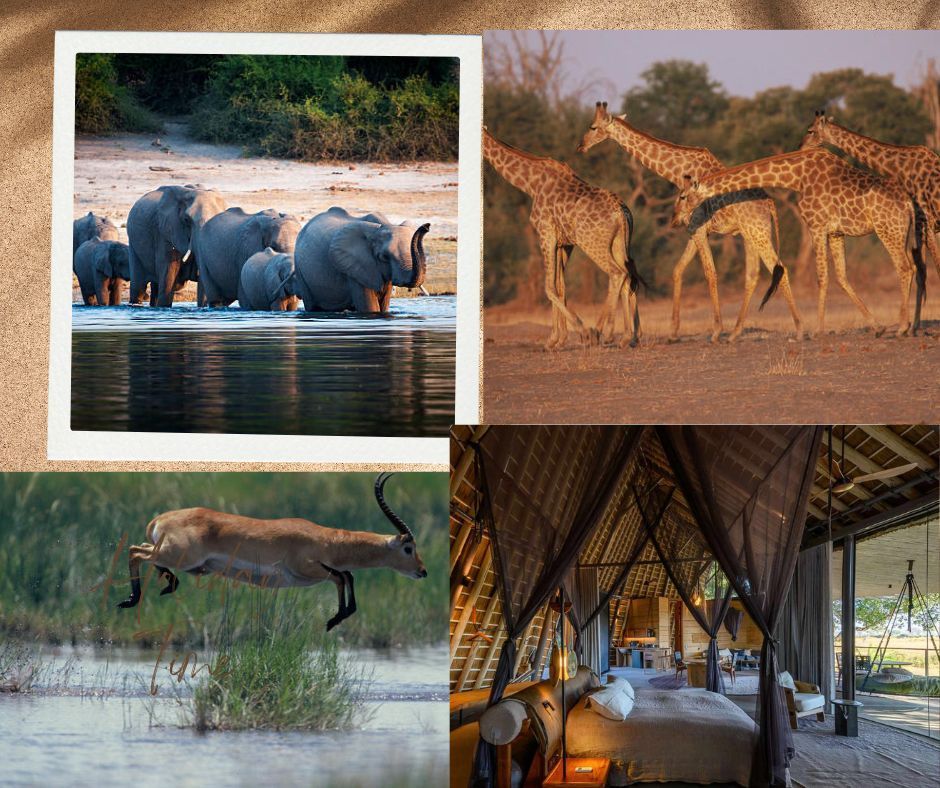
Botswana is home to the world’s highest concentration of elephants – some 120,000 – which reside in northwestern Chobe National Park, where travelers can watch the pachyderms bathe while also keeping an eye out for Africa’s big cats, including lions, leopards, and cheetahs. At the Makgadikgadi Pans – a former lake that evaporated thousands of years ago, leaving behind the world’s biggest salt-pan area – charismatic meerkats attract transiting zebras and wildebeests (followed by their predators) during the continent’s second-largest migration.
Where to Stay: Botswana’s Best Safari Lodges
Sprinkled among the reserves, Botswana’s remote, solar-powered luxury camps provide unparalleled access to the wilderness without sacrificing comfort or style – at prices that ensure privacy. On 11-day Botswana-centric itinerary, travelers stay at the legendary Jack’s Camp in the Makgadikgadi Pans, which is home to just nine tented suites, each with their own plunge pool and indoor and outdoor showers. There, excursions range from close encounters with meerkats to quad biking and walks and talks with Indigenous Zu/San people.
That same itinerary also spends time in the Okavango Delta, where the 12 suites at Xigera Safari Lodge appear to float above the surrounding lagoons. Guests soak up wildlife from verandas, over-water walkways, open-air dining pavilions, and even a lap pool. Spend an evening stargazing at the camp’s communal campfire or spring for a private overnight in the remote but refined tree house that’s perched 30 feet above the floodplain.
The Best Time to Visit Botswana
A Botswana safari shifts with the seasons. Water peaks in the Okavango Delta from May to October, attracting herds of elephants, buffalo, and their predators. During the green summer season, between November and April, travelers can catch up to 25,000 zebras and wildebeests migrating through the Makgadikgadi Pans and Nxai Pan national parks.